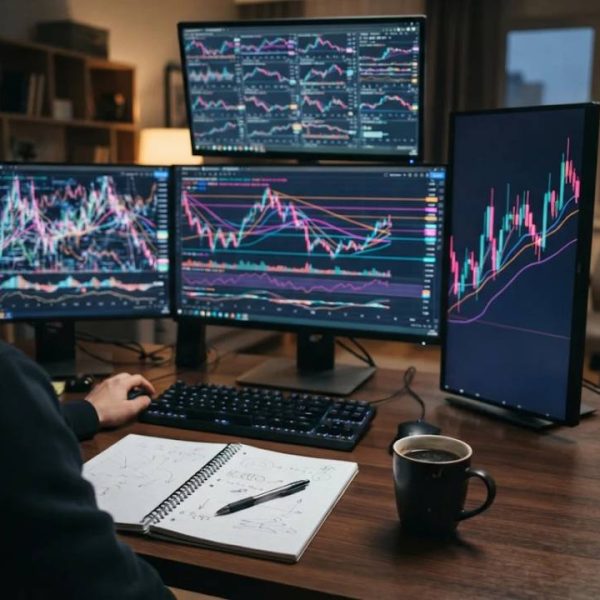
The foreign exchange market, usually called forex, is the largest financial market in the world, where currencies are exchanged around the clock on weekdays. Millions of people follow it, from companies that pay overseas suppliers to individuals who are curious about trading. Understanding how it works is useful for anyone who travels, invests or does business abroad. This article is educational and is not investment advice. It explains the basics of currency markets, the main factors that move prices, the risks involved and the habits of informed readers.
What the Forex Market Is
Forex is the exchange of one currency for another, quoted in pairs such as euro and dollar. The price shows how much of the second currency is needed to buy one unit of the first. Banks, companies, governments, funds and individuals all take part, and trading follows business hours in major financial centers.
Understanding the market comes before any decision about participating in it.
Why Currency Prices Move
Interest rates, inflation, economic growth, employment data, trade balances and political events all influence exchange rates. Central bank announcements often cause sharp movements, because they change expectations about returns on holding a currency.
Prices reflect expectations as much as current facts.
Reading the Economic Calendar
Schedules list when major data and speeches will be released. Readers use them to understand why markets become active at certain times. Learning what each indicator measures is more valuable than memorizing numbers.
A calendar turns surprises into expected events.
Understanding Risk
Currency markets can move quickly, and leveraged products can magnify both gains and losses. Many retail participants lose money, and regulators publish warnings about this. The Investor.gov offers educational material on risks, fraud and questions to ask before investing.
Risk education should come first, not last.
Beware of Scams
Promises of guaranteed profits, pressure to deposit quickly, unregistered brokers and secret systems are warning signs. Check whether a firm is licensed in your country, read independent reviews and never share passwords or remote access to your computer.
If an offer sounds too good to be true, step away.
Education Over Excitement
Quality learning resources include regulator guides, central bank publications, university courses and reputable financial news. Practice accounts can help people understand platforms without risking real money, though they cannot reproduce the emotions of real losses.
Patient learning protects better than fast action.
Currency Knowledge for Everyday Life
Exchange rates affect holidays, online shopping, remittances and international salaries. Compare rates and fees when you send money abroad, avoid airport exchange counters when possible and check what your card issuer charges. Small differences add up over a year.
Practical knowledge saves ordinary people real money.
Documents for International Finance
Opening accounts, applying for loans or proving income abroad often requires translated financial papers. Our article on bank statement translation explains how statements and records are prepared for foreign institutions. Accurate wording and correct numbers are essential.
Careful documents prevent delays with banks and agencies.
Reaching Readers in Many Languages
Financial education works best in the reader's own language. Educational sites and institutions that serve Bengali speaking audiences often rely on bengali translation services for guides, glossaries and consumer warnings, so important risk explanations are understood clearly.
Clear language is a form of consumer protection.
Keeping a Learning Journal
Write down what you learn about economic events, how markets reacted and what surprised you. Reviewing notes reveals patterns in your own thinking and helps you avoid repeating mistakes. A journal also builds a habit of careful analysis.
Reflection turns information into understanding.
Managing Emotions
Fear and excitement affect judgment. People who follow markets often benefit from rules made in calm moments, limits on how much time they spend watching prices and conversations with trusted, qualified advisers before major financial decisions.
Emotional discipline matters more than clever predictions.
Regulation and Consumer Rights
Regulators set rules for brokers, disclosure and complaints. Learn which authority supervises financial firms in your country and how to file a complaint. Keep records of contracts and communications.
Knowing your rights is part of financial literacy.
Talking to a Qualified Professional
For decisions about investing, taxes or business exposure to currencies, consult a licensed professional who understands your situation. General articles cannot replace personal advice.
A qualified adviser can consider details that a general guide cannot.
Good planning starts with understanding the basics, and that is where a clear guide to financial planning can help a reader see how forex fits alongside savings, investing and risk management. A written plan turns general knowledge into personal decisions, from how much to set aside to which risks are worth taking. Many readers find that a structured overview of stocks, bonds and cash flow makes their next step obvious. Starting with that wider picture keeps any single market, however exciting, in its proper place.
A Simple Learning Plan
Start with a glossary of basic terms, read about central banks and inflation, follow reliable news for several weeks, study risk warnings and review how currency moves affect real businesses. Take time before any decision and keep learning.
Steady study builds confidence without pressure.
Final Thoughts
Forex is a fascinating part of the global economy, but it is complex and risky. Reading, comparing sources and staying skeptical are the best tools for anyone who wants to understand it. Treat this article as a starting point for your own research.
Knowledge is the most valuable asset in any market.